Adjective + Preposition

Adjective + Preposition

Ada sejemlah adjective yang harus diikuti preposisi tertentu dan tidak bisa diganti oleh preposisi lain, misalnya: I am interested in ancient history. (Saya tertarik pada sejarah kuno.) kata “interested” selalu berpasangan dengan “in”  tidak bisa diganti preposisi lain.

Berikut adalah kata sifat dan pasangannya:

Adjective + of

Afraid of (takut dengan)

Ashamed of (malu dengan)

Conscious of (sadar akan)

Ford of (suka dengan)

Full of (penuh dengan)

Jealous of (cemburu dengan)

Shy of (malu dengan)

Tired of (lelah dengan)

Aware of (sadar akan)

Capable of (mampu untuk)

Envious of (cemburu dengan)

Frightened of (takut dengan)

Innocent of (tidak bersalah dalam)

Short of (kekurangan)

Proud of (bangga dengan)

Adjective + at

Excellent at: sangat baik dalam hal ….

Brilliant at: sangat pintar dalam hal …

Good at: baik/pandai dalam hal ….

Bad at: buruk dalam hal …

Amused at : senang dengan

Mad at: marah kepada

Adjective + with

Disappointed with: kecewa dengan

Annoyed with: kesal dengan

Angry with: marah dengan

Bored with: bosan dengan

Crowded with: padat dengan

Delighted with: gembira dengan

Surprised with: heran/kaget dengan

Offended with: terhina dengan

Satisfied with: puas dengan

Furious with: murka dengan

Content with: puas dengan

Fed up with: muak dengan

Pleased with: senang dengan

Adjective + to

Related to: berhubungan dengan

Cruel to: kejam terhadap

Similar to: mirip/sama dengan

Eager to: berhasrat untuk melakukan

Married to: menikah dengan

Adjective + on:

Depend on: tergantung pada

Intent on: berniat  untuk

Adjective + from

Different from: berbeda dari

Adjective + about

Worried about: khawatir dengan

Mad about: tergila-gila dengan

Excited about: senang sekali dengan

Adjective + for

Famous for: terkenal karena

Responsible for: bertanggung jawab terhadap

Adjective + in

Interested in: tertarik pada hal …

Adjective + by

Shocked by: terkejut oleh

Amazed by: terheran-heran dengan

daftar kata sifat bahasa inggris common/ basic english adjective

Adjective (kata sifat) Penjelasan Lengkap

Adjective (kata sifat)

Definisi adjective (kata sifat)

Adjective dalam bahasa indonesia diartikan kata sifat. Fungsi kata sifat adalah menjelaskan kata benda (noun). Adjetive di letakkan sebelum kata benda, contohnya big house. Kata “ big menjelaskan sifat dari kata benda “house”.

Jenis-jenis kata sifat antara lain:

  1. Demonstrative: this, these, that, those
  2. Distributive: each, every, either, neither
  3. Quantitative: some, any, much, many, a lot of, a few, a little, few, little, several, half, whole.
  4. Possessive: my, your, his, her, its, our, their
  5. Numeral: one, two, first, second dan sebagainya
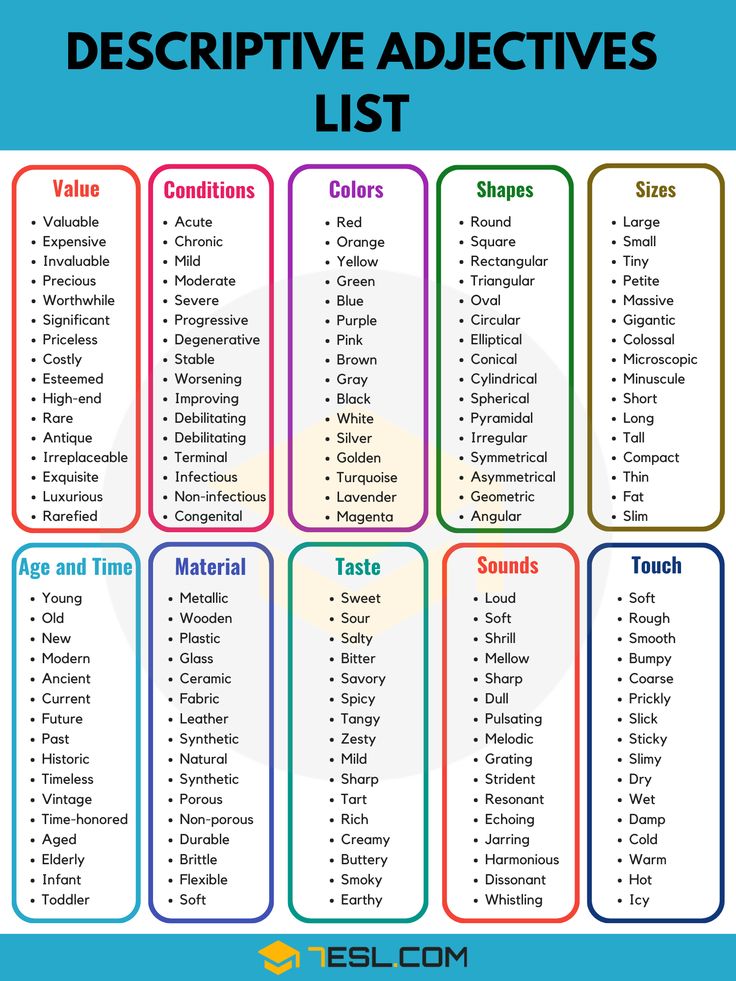
  6. Descriptive: tall, beautiful, handsome dan sebagainya

Cara membentuk kata sifat

Kata sifat (adjective) bisa dibentuk dari kata benda (noun), kata kerja (verb), and kata sifat itu sendiri.

Kata sifat yang dibentuk dari kata benda dengan ditambahkan akhiran -al, -en, -ful, -y, -ous, -less.

Contohnya:

-al: music -> musical, nature -> natural

-en: gold -> golden, wood -> wooden

-ful: beauty -> beautiful, power -> powerful

-ous: danger -> dangerous, poison -> poisonous

-less: hope -> hopeless, power -> powerless

Kata sifat yang dibentuk  dari kata kerja (verb) dengan ditambahkan akhiran -able and -ive

Contohnya:

-able: afford -> affordable, comfort -> comfortable

-ive: protect -> protective, educate -> educative

Kata sifat yang dibentuk dari kata sifat menggunakan awalan in, im, un, il, ir yang kesemuanya memiliki makna tidak

Contohnya:

In: active-> inactive

Impolite: polite -> impolite

Un: predictable -> unpredictable

Il:legal -> illegal

Ir: rational -> irrational

Posisi adjective dalam kalimat

  1. Sebelum kata benda: I have a new car.
  2. Setelah kata seem, look, feel, become, get, smell, sound, taste: It feels great.
  3. Setelah adverb of degree (kata sifat yang menunjukan tingkatan): She is very pretty.
  4. Setelah objek: Her smile makes me happy.
  5. Setelah kata yang menunjukkan ukuran: five meters long.
  6. Jika ada beberapa kata sifat yang menerangkan sebuah kata benda secara sekaligus, maka urutannya jadi: ukuran – sifat – warna – asal tempat – bahan – tujuan + noun. Contoh: a strong, comfortable, brown Japanese wooden house.

Catatan tambahan:

Preset participle  dan past participle bisa digunakan sebagai adjective seperti contoh berikut:

Present participle dengan menambahkan akhiran -ing: the sleeping baby, the crying girl.

Past participle dengan menambahkan akhiran -ed: an experienced worker, an educated man.

daftar kata sifat bahasa inggris common/ basic english adjective

Describing Appearance and Personality Bahasa Inggris

Describing Appearance and Personality

Berikut ini adalah daftar kata yang umum digunakan untuk mendeskripsikan orang lain dalam bahasa inggris (describing appearance and personality):

Describing Physical Appearance:

Mendeskripsikan penampilan fisik:

Face= wajah

Slanted eyes= sipit

Pointed nose = mancung

Flat nose = pesek

Ears= telinga

Lips= bibir

Hair=rambut

Straight hair = rambut lurus

Wavy hair = rambut ikal/ bergelombang

Curly hair = rambut keriting

Bald = botak

Blonde hair = rambut pirang

Black hair = rambut hitam

Red hair = rambut pirang (kemerah-merahan)

Grey hair= uban

Pigtail = rambut dikuncir

Sideburns = cambang

Thin face = wajah kurus

Round face = wajah bulat

Chubby face = wajah gemuk/ tembem

Wrinkles = keriput

Freckles = bintik-bintik wajah

Beard and moustache = jenggot dan kumis

Height and Build (Tinggi badan dan perawakan):

Slim = langsing

Obese = obesitas

Fat = gendut

Overweight = gendut

Stocky = pendek gemuk

Well-built = tegap, berotot

Muscular = berotot

Well-built= kekar

Thin = kurus

Skinny = kurus

Tall = tinggi

Short = pendek

Medium height = tinggi sedang

Complexion/ skin color (warna kulit):

Fair skin = berkulit putih

Yellow skin = berkulit kuning (warna kulit orang asia)

tanned = berkulit kecoklatan

Dark/ black skin = berkulit hitam

Accessories :

Glasses: Kaca Mata

Watch: Jam tangan

Bracelet: Gelang

Age (usia):

Baby= bayi

Toddler= Balita

Child (anak), kata jamaknya children yang berarti anak-anak

Teenager= remaja

Adult= dewasa

Middle-aged= paruh baya

Elderly= orang tua


General Appearance (Penampilan umum):

Elegant = elok, elegan

Tidy = rapi

Untidy = tidak rapi

Good looking = menarik, cantik, tampan

Unattractive = tidak menarik

Beautiful = cantik

Handsome = tampan

Attractive = menarik (penampilan)

Charming = menarik (penampilan)

Ugly = jelek

Gorgeous= indah

Messy= berantakan/ tidak rapi

Baca Juga: Phrasal Verb

Describing Personality Traits:

Mendesripsikan kepribadian:

Honest= Jujur

Ambitious= Ambisius

Arrogant= Sombong

Diligent= Rajin

Lazy= Malas

Persistent= Gigih

Tough= Tabah

Mischievous= Jahil

Bad-tempered= Pemarah

Truthful/ Sincere= Tulus

Sly= Licik

Naughty= Nakal

Grudging= Pendendam

Forgiving= Pemaaf

Forgetful= Pelupa

Humble= Rendah Hati

Reckless= ceroboh

Ignorant= Cuek

Cold-Hearted= Berhati Dingin

Greedy= Rakus

Cheerful= Periang

Calm= Tenang

Bossy= Suka Memerintah

Shy= Pemalu

Confident= Percaya Diri

Naughty= Nakal

Pious= Alim

Easy To Get Going= Mudah Bergaul

Graceful= Lemah Gemulai

Polite= Sopan

Liar= Pembohong

Saat menulis descriptive text sebaiknya menggunakan graphic organiser seperti ini:

Descriptive text

Soal Latihan

ambitious – careless – cautious – cheerful – greedy – healthy 

ordinary – outgoing – polite – serious – slim – tall – wealthy – funny

Pilihlah kata yang tepat untuk melengkapi kalimat berikut!

  1. My girlfriend likes to do sports and eat fresh vegetables. She doesn’t smoke so I guess

she’s a very ___________________ person.

  1. ___________________ people always want more and more. They are never satisfied with what they have.
  2. Since she has gone on a diet and lost 10 kg she has become a ___________________ young lady.
  3. My sister is not very ___________________. She never goes to parties and doesn’t like to meet people.
  4. Nobody is more ___________________ than my little brother. He never picks up anything and throws all his belongings around.
  5. Dan and Benny are very ___________________ when they cross the street. They are afraid of being hit by passing cars.
  6. He’s so ___________________. He always wants to be the best in class.
  7. Nothing seems to make grandfather sad. He is such a ___________________ person and smiles all the time.
  8. Jack is not ___________________ enough to be a basketball player. He’s only 155 cm.

10.We taught our children to be ___________________ and always say “please” and “thank you”.

  1. Her classmates think she’s an ___________________ girl, but she herself thinks she’s something special.
  2. My uncle likes to tell jokes and entertain people. He’s very ___________________.
  3. You can never go out and have fun with him. He never laughs and is so ___________________ all the time.
  4. She has two cars, a large house and always wears the most expensive clothes. She seems to be very ___________________.